|
December
17, 2003: Industrialization. Specialization. Concentration.
These trends have been reshaping U.S. agriculture since the
1960s, but they haven’t boosted farmers’ profitability.
Those who dare to buck this broken “megafarm”
model are increasingly finding themselves out in the cold.
“What’s at risk today is the mid-sized farm,”
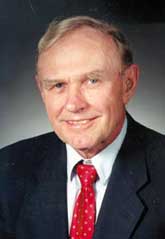
warns Fred Kirschenmann, director of the Iowa-based Leopold
Center for Sustainable Agriculture ().
“We’ve got a decade—maybe two decades at
most—if we want to stop the erosion of this disappearing
middle.”
These farms hold a significant place in our society, he says.
“In Iowa, 80 percent of the land fits in the mid-sized
farm category,” Kirschenmann told the crowd gathered
for the 2003 National Biodynamic Conference ()
in Ames, Iowa. “People who own these farms know their
land and treat it like a member of the family. You can’t
buy that kind of stewardship. If the mid-sized farms disappear,
we’ll lose all that social capital.”
Applying the wrong solutions
As these farms struggle to survive, they often get trapped
in the downside of industrialized agriculture, where an intended
solution becomes part of the problem, Kirschenmann explained
during his keynote address.
In the 1920s, he said, half of Iowa’s farms produced
10 commodities. “Today, 92 percent of Iowa’s cultivated
land is in corn and soybeans. Farming systems that were once
supported by complexity and diversity of species have now
been replaced by reliance on inputs. Input suppliers like
the current system, but it’s not good for farmers.
“In Iowa, 60 percent of farm families have a least
one person working off the farm to pay expenses, because the
farm isn’t making enough money.”
This failing farm model is a prime example of the phenomenon
Peter Senge described in his management book The Fifth
Discipline, said Kirschenmann, quoting “The long-term,
most insidious consequences of applying non-systemic solutions
is the increased need for more and more of the solution.”
This situation, he said, highlights the need for “therapeutic
intervention” as described by Joe Lewis, Ph.D., in his
essay for the National Academy of Sciences entitled “A
Total Systems Approach to Sustainable Pest Management”
().
“With the therapeutic approach, you don’t ask
how to get rid of a pest,” Kirschenmann explained. “Instead,
you figure out what has gone wrong with the system that allows
the pest to emerge.”
Rewarding farmers adequately
“There’s this belief that there’s a great
black hole out there that wants to buy the agricultural products
we produce,” Kirschenmann said. “But USDA just
announced that the United States is on the verge of becoming
a net importer of ag products. Trade is not the solution to
the problem.”
Producing more crops and livestock won’t provide a
sustainable solution, either, he said. “Studies in Iowa
have shown that the most efficiencies are gained on farms
that market 800 to 1,000 pigs annually,” Kirschenmann
said. “Soybean farms reach their peak efficiency at
600 acres, and corn farms start losing peak efficiencies after
600 acres.”
The key is to find ways to reward farmers adequately for
their role in bringing food to the market, Kirschenmann said.
“We need to enable farmers to produce products of unique
and superior value rather than low-cost commodities.”
As Harvard economist Michael Porter points out in his book
Competitive Advantage of Nations, there are two types
of competitive advantage, said Kirschenmann. You are either
a low-cost producer, or you offer differentiation based on
product quality, special features, or after-the-sale service.
“Rick Schneiders, president and CEO of SYSCO, one
of the nation’s largest food distributors, says his
company’s marketing strategy is based on ‘memory,
romance and trust,’” Kirschenmann said. “Memory
is when a customer eats a product and says, ‘Wow, I
want that again.’ Romance is the story behind the food’s
production. Trust creates an opportunity to form a relationship
between the consumer and the producer.”
Can a big company like SYSCO achieve all this? “We don’t
know yet,” Kirschenmann said. “But SYSCO has told
us the new market is about memory, romance and trust. Since
the market’s there, we need to connect farmers with
this market.”
Finding creative solutions
A growing number of farmers are discovering new ways to tap
this market. Here are some that Kirschenmann highlighted in
his address:
At Heartland Bison Ranch
located near Mandan, N.D., visitors can “Lease a Piece
of the Legend” and adopt a buffalo, which entitles
the recipient to receive regular updates on his or her buffalo
cow and her calf. This sets the stage for the purchase of
Buffalo Nickel Bison meat products, which are certified
hormone- and antibiotic-free, raised only on grass and hay.
At Organic Valley
(),
visitors can view photographs and read about the farm animals
and the 500 farmer-members in 17 states who care for the
livestock. Kids can take a virtual farm tour through the
Farm Friends Kids Club. In many ways, the site seeks to
foster connections between farm families and their urban
neighbors. Visitors can also locate nearby stores that sell
Organic Valley products.
The GROWN Locally Cooperative
()
is a coalition of northeast Iowa food growers and local
food service professionals working together to provide fresh,
locally-grown food for their customers. The co-op’s
philosophy is to establish and expand relationships between
local food growers and food service providers so that each
can strengthen local agricultural economies.
Along with these examples, more farmers are developing production
strategies that evolve from an ecological, rather than a technological,
system, Kirschenmann said.
A leading example is the integrated duck/rice system developed
by Takao Furuno, a farmer in southern Japan. In Furuno’s
area, standard rice production is now a monoculture that depends
on heavy inputs of fertilizers and pesticides.
“Up until 1987, Furuno was an industrial rice farmer,”
Kirschenmann said. “But then he started asking himself
if there was a way to get off this treadmill. He remembered
how farmers in Japan used to keep ducks and fish in their
rice paddies, so he put a gaggle of young ducklings into his
newly planted paddies.”
The rice farmer found that the ducks eat azolla, which is
normally considered a paddy weed, Kirschenmann said. “Furuno
then introduced loaches, a fish that is delicious to eat.
The fish and the ducks eat the azolla, keeping it under control.
The droppings from the ducks and fish provide nutrients for
the rice.” Furuno also discovered that 200 ducks per
hectare can take care of his insect problems, Kirschenmann
said, and that the friendly fowl even eat golden snails that
attack the roots of the rice plants.
“Now Furuno’s rice yields exceed those of industrial
rice systems by 20 to 50 percent. He rotates his integrated
rice/duck crop with a crop of vegetables and wheat and grows
figs on the periphery of the paddies. He harvests duck eggs
that he markets with the rice, fish and duck meat, vegetables,
wheat and figs. His 6-acre farm is among the most productive
in the world.”
Providing benefits to farmers and society
As farmers and other leaders in agriculture explore how
to develop ecological equivalents in the United States, Kirschenmann
said, new production and marketing systems are needed to help
U.S. farmers transition away from the government subsidy system.
“We need to provide incentives for farmers to produce
public goods like clean air and water and quality soil. The
public is ready to support this. We also need to remove unnecessary
regulatory requirements that put micro-enterprises at a competitive
disadvantage.”
Kirschenmann concluded with a quote from Wendell Berry: “If
agriculture is to remain productive, it must preserve the
land. The land must be used well. The people must know it
well, must be highly motivated to use it well, must know how
to use it well, must have time to use it well, and must be
able to afford to use it well.”
“The question is, what kind of farmer can do this?”
Kirschenmann asked rhetorically. “I don’t think
farmers who follow the industrial model can. That’s
why we must sustain an economic future for America’s
mid-sized farms.”
|